What we doAir Ambulance
Bedside to bedside.
Embraer air ambulances with an ICU team on board, from Wilson Airport.
The short version
We fly critically ill and injured patients between hospitals, within Africa and beyond it, in Embraer ERJ-145 jets fitted as intensive-care units. A medical team comes on every flight, and a coordination desk arranges the rest: clinical planning, permits, and the ground ambulances at each end.
Key facts
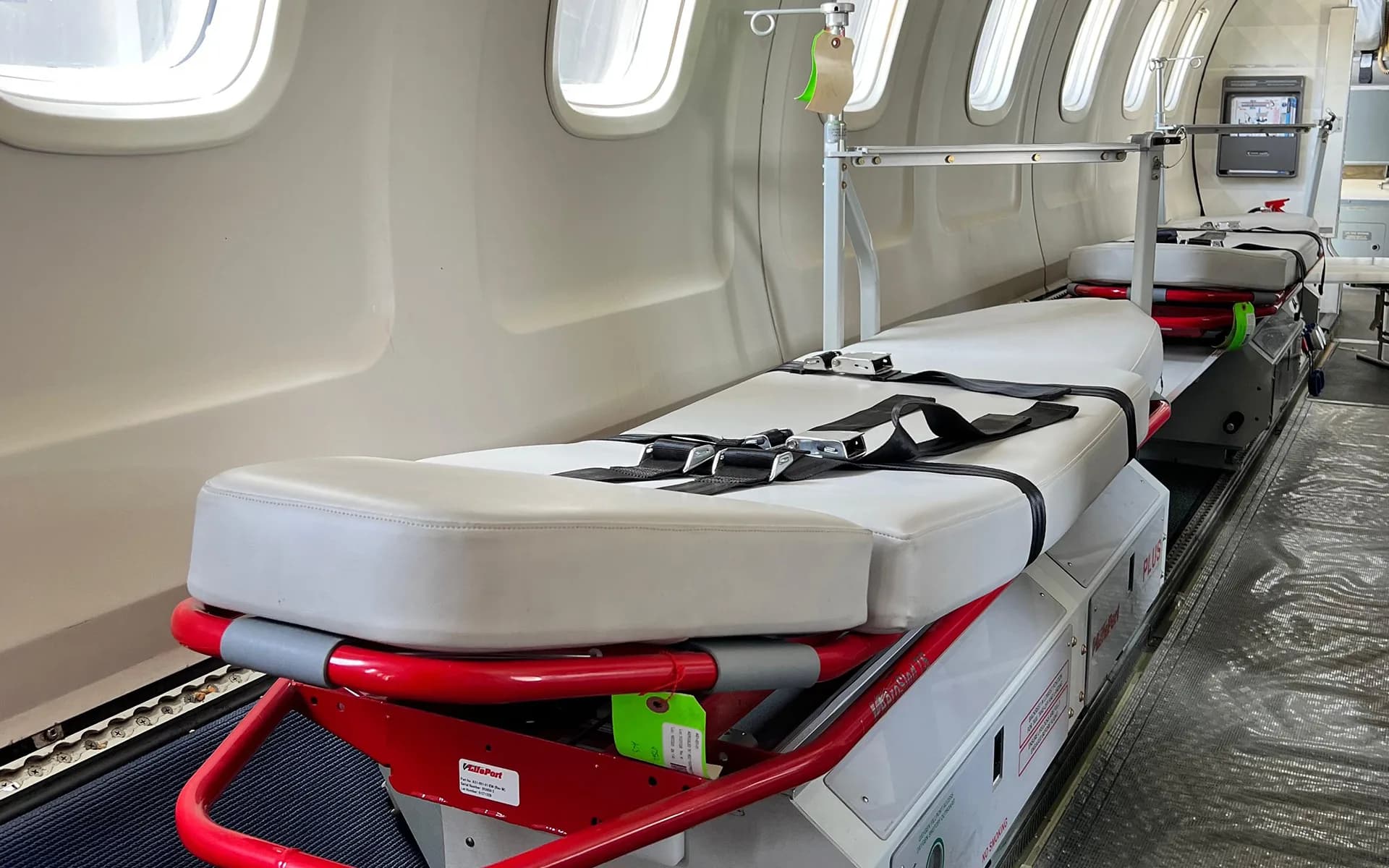
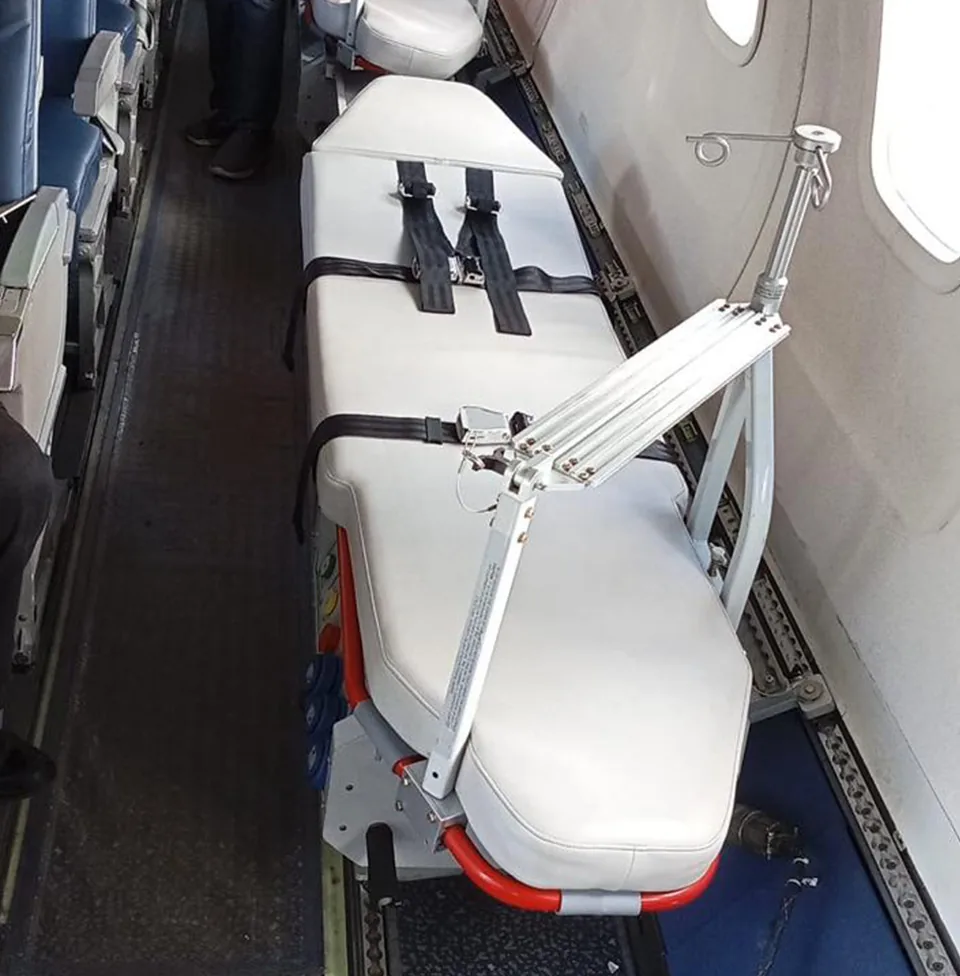
- Stretchers per aircraft, on the LifePort system, plus seats for the medical team and family
- 2
- Range of the ERJ-145 XR: Nairobi to Johannesburg without refuelling
- 3,700 km
- Medical coordination desk
- 24/7
- Dedicated air ambulance jets
- 2
How it works
The call.
Our coordination desk answers around the clock and takes the patient's details from the referring doctor, the insurer or the family.
Clinical review.
A doctor checks the patient is fit to fly and plans the care in the air.
Activation.
Crew, aircraft, overflight permits, landing permits and ground ambulances, arranged in parallel.
The flight.
ICU care on board, from the hospital bed at one end to the hospital bed at the other.
Handover.
Our team hands the patient over to the receiving hospital in person.
On board
- Ventilators
- Multi-parameter monitors with defibrillation
- Infusion pumps
- Oxygen
- Suction
- Trauma and immobilisation kit
- Point-of-care diagnostics
The medical team
ICU-trained doctors, anaesthetists, critical-care nurses and paramedics, led by a Medical Director and a Chief Nursing Officer.
Clients
Who we fly for
- International NGOs
- Peacekeeping forces
- Government agencies
- Hospitals
- Insurers and assistance companies
- Companies
- Private patients and their families
Questions
What medical equipment is on board?
Ventilators, multi-parameter monitors with defibrillation, infusion pumps, oxygen, suction, trauma and immobilisation kit, and point-of-care diagnostics: enough for intensive care in the air.
How many patients can one aircraft carry?
Two, on LifePort stretchers. There are seats for the medical team, and for family or companions when needed.
Who looks after the patient in the air?
A medical team flies on every mission: ICU-trained doctors, anaesthetists, critical-care nurses and paramedics, led by a Medical Director and a Chief Nursing Officer.
How far can the aircraft fly without stopping?
About 3,700 km in the ERJ-145 XR (Embraer's figure is 2,000 nautical miles), so Nairobi to Johannesburg is one flight. Cairo and Dubai are at the edge of that range and depend on load and winds.
Who arranges permits and ground ambulances?
Our coordination desk. Overflight and landing permits and the ground ambulances at each end are arranged in parallel with the crew and the aircraft, around the clock.
Emergency? Call. Don't fill in a form.
Seven more ways to use it.
- Humanitarian & UNAircraft, crews and engineers for the aid world. "Go now" included.
- Wet Lease & ACMIYour flight number. Our everything else.
- Energy & MiningCrew changes and site runs, to oil-company audit standards.
- CharterChoose the aircraft, the day and the airstrip. We'll bring the pilots.
- MaintenanceA hangar at Wilson Airport, open to other people's aircraft too.
- Flight TrainingLearn to fly at an airline. Then stay for the job.
- HelicoptersFor when there's no strip at all.